What Is Caltech Known For?
Summary
The California Institute of Technology, commonly known as Caltech, is one of the most respected science and engineering universities in the world. Located in Pasadena, California, Caltech's 124-acre campus is about 10 miles northeast of downtown Los Angeles. The institute manages numerous research centers, including NASA's Jet Propulsion Laboratory, The Palomar Observatory, and Keck Institute for Space Studies. Although small in size, the school boasts a 1:3 faculty to student ratio and it's faculty and students are credited with many notable scientific discoveries and innovations.
Caltech is known for its groundbreaking contributions to science and engineering, its intimate and collaborative campus culture, and its role in managing NASA’s Jet Propulsion Laboratory. But there’s much more to this powerhouse institution.
In this blog, we’ll explore what makes Caltech one of the most respected universities in the world. We'll cover:
- Caltech's impact on science and the world, including some of its most famous innovations
- Key research divisions and facilities at Caltech
- Student life and the campus community at Caltech, including its residential House system and its one-of-a-kind Honor Code
- Campus traditions and pranks
- Landmarks and campus highlights
Whether you’re a prospective student or just curious about this iconic institution, read on for a deeper understanding of Caltech’s impact on the world!
Caltech’s Impact on Science and Society
The California Institute of Technology, commonly known as Caltech, is one of the most respected science and engineering universities in the world.
Located in Pasadena, California, Caltech's 124-acre campus is about 10 miles northeast of downtown Los Angeles. The institute manages NASA's Jet Propulsion Laboratory and consistently makes a big impact in STEM fields, despite its small size.
Although Caltech’s community is small — it has just 2,200 students, 300 faculty, and 600 postdoctoral scholars — it’s still at the forefront of scientific research and innovation.
One of the most notable indicators of Caltech’s success is its record of Nobel Prize winners. With 47 Nobel Prizes awarded to its faculty and alumni, Caltech stands as one of the most successful institutions in the world when it comes to scientific discovery. Some of its Nobel Laureates include Linus Pauling, who won two unshared Nobel Prizes in chemistry and peace, and Richard Feynman, a theoretical physicist renowned for his work in quantum mechanics.
Caltech’s research centers have also played a critical role in shaping scientific progress. The Jet Propulsion Laboratory (JPL), managed by Caltech for NASA, has been responsible for major space missions like the Mars rovers and Voyager spacecraft. These missions have advanced our understanding of the solar system and beyond. Meanwhile, Caltech’s Resnick Energy Sustainability Institute works on projects addressing energy challenges and environmental concerns.
Historical Discoveries and Innovations at Caltech
Caltech’s legacy of scientific achievement includes many important discoveries that have changed our understanding of the universe. Here are just some of the contributions that Caltech researchers have made over the years:
- Gravitational Waves Detection (2015): In a groundbreaking achievement, Caltech researchers working with MIT were the first to directly detect gravitational waves — ripples in spacetime caused by the collision of massive objects like black holes. This discovery confirmed a major prediction of Einstein's general theory of relativity and opened up a new area of research in astrophysics.
- Self-Healing Microchips (2013): In 2013, Caltech engineers developed microchips capable of repairing themselves when damaged. Inspired by biological processes, this innovation allows the chips to detect faults and restore their functionality. It has potential applications in everything from electronics to medical devices.
- Evidence of a Ninth Planet (2016): In 2016, Caltech astronomers proposed the existence of a ninth planet about 1.5 the size of Earth in our solar system, based on the unusual orbits of distant objects beyond Neptune. Though still theoretical, this discovery has sparked new research into the outer reaches of our solar system.
- Seismology Contributions: In the 1930s, Beno Gutenberg and Charles Richter developed the Richter scale to measure earthquake magnitude. Later, Caltech researchers developed the moment magnitude scale, which provides more accurate readings for larger quakes.
- Discovery of Brown Dwarfs (1995): In 1995, Caltech astronomer J. Davy Kirkpatrick and colleagues identified the first brown dwarfs — celestial objects that are too massive to be planets but not massive enough to sustain hydrogen fusion like stars. This discovery expanded our understanding of stellar and planetary formation.
- Development of the First Infrared Telescope (1960s): In the 1960s, Caltech physicist Robert B. Leighton and his team developed the first infrared telescope. This enabled astronomers to observe celestial objects in the infrared spectrum. This innovation led to the identification of new stars and galaxies.
- Toxic Lead: While working at Caltech, geochemist Clair Patterson made a startling discovery: toxic lead was contaminating everything — from his lab instruments to ocean water to the human body. His pioneering research led to efforts to eliminate lead from gasoline and prompted the implementation of environmental protections like the Clean Air Act of 1970.
Key Research Divisions at Caltech
Caltech is organized into six main academic divisions.
- Biology and Biological Engineering
- Chemistry and Chemical Engineering
- Engineering and Applied Science
- Geological and Planetary Sciences
- Humanities and Social Sciences
- Physics, Mathematics, and Astronomy
Although each division provides specialized education, Caltech is known for its spirit of interdisciplinary collaboration.
Notable Research Centers and Facilities
Caltech’s research centers and facilities provide the tools necessary to produce groundbreaking work.
- Jet Propulsion Laboratory (JPL): Managed by Caltech, JPL is a major player in the exploration of space. It is responsible for missions such as the Mars rovers and the Voyager spacecraft. Through JPL, students and faculty have contributed to some of the most important discoveries in space exploration.
- Palomar Observatory: Home to the 200-inch Hale Telescope, this observatory has been instrumental in astronomical discoveries. It allows researchers to study distant stars, galaxies, and other celestial objects.
- Keck Institute for Space Studies (KISS): Established in 2008, KISS brings together experts in space studies to collaborate on the development of space missions and technologies. It advances ideas that could transform space exploration in the future.
- Kármán Laboratory of Fluid Mechanics and Jet Propulsion, Guggenheim Aeronautical Laboratory, and Firestone Flight Sciences Laboratory:
These laboratories have played a vital role in the development of California’s aerospace industry. Their state-of-the-art wind tunnels that have been used to test military and commercial aircraft, windmills, bicycles, and more. The John W. Lucas Adaptive Wall Wind Tunnel helped engineers develop a device that allows planes to fly with smaller tails, increasing fuel efficiency and reducing environmental impact.
As a Caltech student, these centers provide opportunities for you to conduct world-class research, collaborate with experts, and contribute to groundbreaking advancements.
The Small but Mighty Caltech Community
With only around 2,200 students, Caltech’s size is closer to that of the average American high school than a powerhouse university. Caltech’s faculty-to-student ratio of 3:1 offers a coveted level of facetime with professors, all of whom are at the top of their fields. The university has a reputation for being more friendly to undergraduates than other institutions, where graduate and postgraduate research may be prioritized.
The tight-knit nature of the Caltech community extends beyond academics. Traditions like Ditch Day and Rotation (more on these in a moment) encourage students to form strong bonds. Many Caltech students mention that the campus culture feels like a family.
Caltech’s Unique “Honor Code” System
One of the most unique aspects of Caltech is its Honor Code, which allows students and faculty “an unusual level of trust in one another.” Caltech students tend to love the honor code. They cite major privileges like academic freedom and trust in personal responsibility. For example, because of the honor code:
- Students can take exams from anywhere on campus with flexible time limits and resources.
- They can leave homework in designated boxes at any time of day or night without worrying about deadlines.
- Solutions are often posted online, and students are trusted not to misuse them.
- Collaboration is encouraged, with many classes allowing students to work together on whiteboards and share general approaches, as long as they write up answers independently.
The Honor Code extends beyond academics. Students feel safe leaving belongings, such as laptops or sweatshirts, unattended in dorm lounges or cafeterias. Many leave their rooms unlocked for extended periods, confident in the integrity of their peers.
The House System and Rotation
Caltech's House system, inspired by the residential college models at Oxford, Cambridge, Yale, and Harvard, is a signature part of campus culture. A House is both a physical residence and a social hub. In houses, students dine together every weeknight, study together, and live together. Unlike most other college campuses, all the students in a house have dinner together at the same time every weeknight. This contributes to the close-knit community inside each house.
Houses have distinct personalities and traditions that tend to persist over the years. Each House also serves as part of Caltech's student government, with its own self-governing rules and representation in campus-wide committees like the Associated Students of Caltech (ASCIT) and the Interhouse Committee (IHC). Students can opt out of the House system if they wish. Those who opt out will be placed in unaffiliated housing.
“Rotation” is the process by which upperclassmen help assign incoming freshmen to Houses. It starts the week before classes and lasts two weeks. During Rotation, first-year students meet members of each House. The campus is so small that usually, everyone can meet everyone. They participate in activities that showcase the Houses' unique cultures and then rank their preferences on a form.
Campus Traditions and Pranks
Caltech isn’t all work and no play. Its students manage to find time between studying for creativity and humor. The following traditions and pranks add to the charm of the Caltech community.
- Ditch Day: Each year, Caltech seniors disappear for a day and leave behind intricate puzzles and challenges for underclassmen. These puzzles require creativity and problem-solving skills. It’s a tradition that encourages teamwork and intellectual play.
- The Great Rose Bowl Hoax (1961): One of the most famous pranks in Caltech’s history, students altered the flip-card display at the 1961 Rose Bowl to spell “CALTECH” instead of the expected team names. The prank was broadcast to millions.
- The Hollywood Sign Prank (1976): In 1976, Caltech students made headlines when they modified the iconic Hollywood sign to read “CALTECH.”
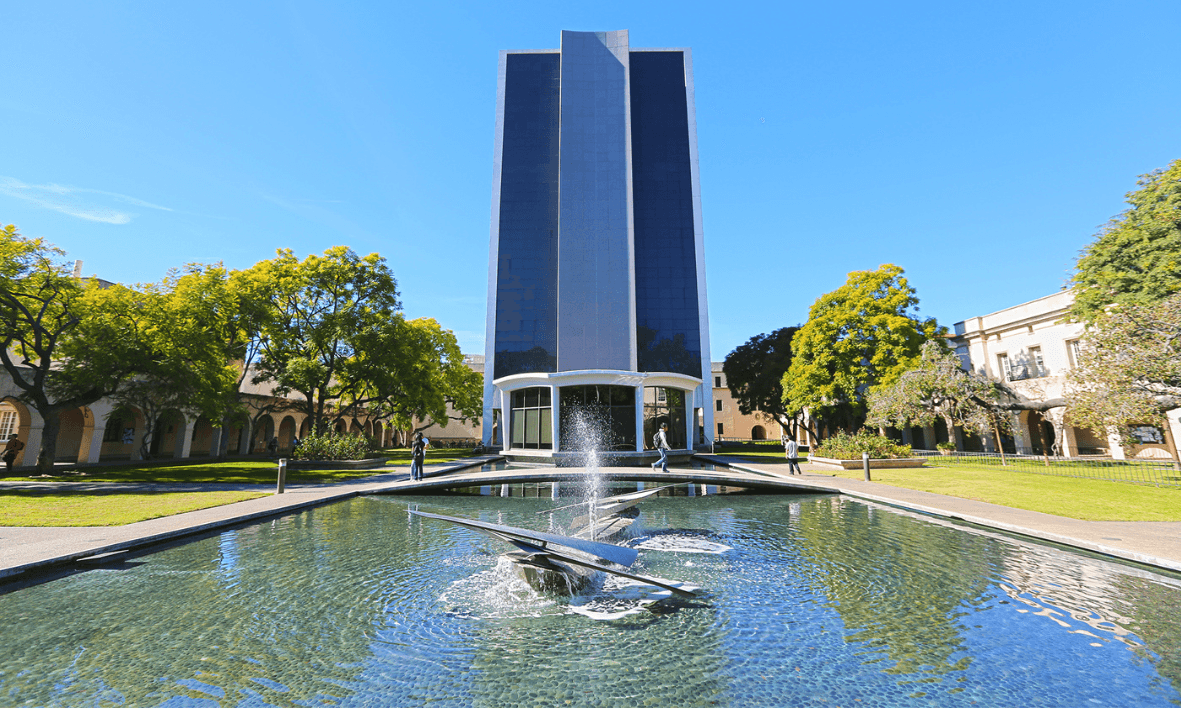
- The Millikan Pumpkin Drop: Each Halloween, Caltech students drop a pumpkin frozen in liquid nitrogen from the top of Millikan Library to observe the shattering. This event is a nod to the famous Millikan oil-drop experiment and highlights the community’s mix of scientific curiosity and fun.
- The Great Cannon Heist (2006): The 1.7-ton, 130-year-old cannon that sits in front of Fleming House is a relic of the Franco-Prussian War. A loud but harmless charge is fired to celebrate occasions like commencement or the last day of the academic term. In 2006, MIT students stole the cannon. This playful “act of war” led to a series of pranks between the two institutions.
- The TARDIS on the Roof (2011): In 2011, Caltech students collaborated with MIT peers to place a replica of the TARDIS from “Doctor Who” on the roof of MIT's Building 7.
Landmarks and Campus Highlights
Caltech’s Southern California campus is home to several landmarks and distinctive features that contribute to its unique character.
- The Olive Walk: Designed by landscape architect Florence Yoch, who also worked on the gardens for the sets of Gone With the Wind, the Olive Walk is one of Caltech’s most recognizable spots. The olive trees planted here have been harvested by the Caltech community for oil.
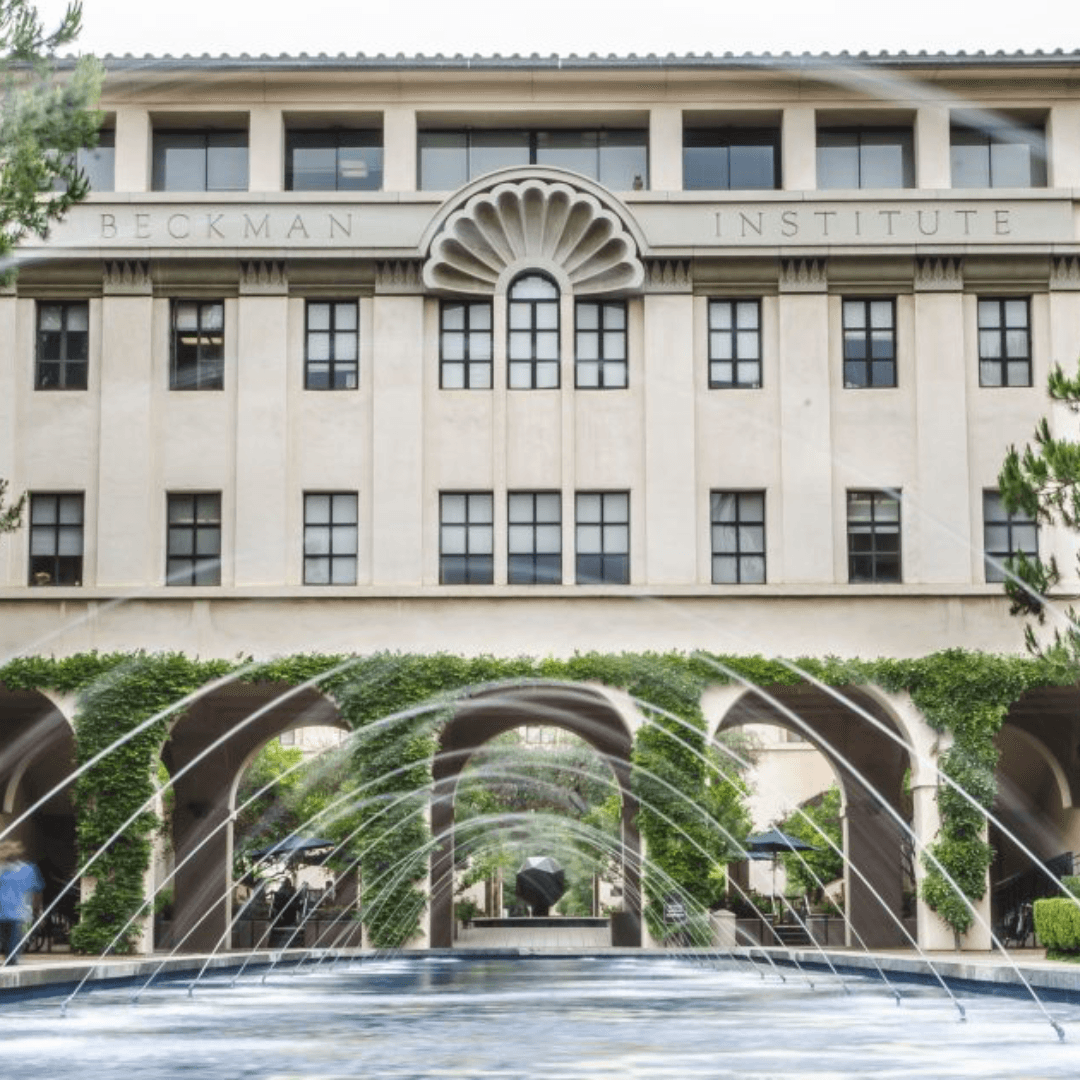
- The Beckman Institute: This research center is named after Arnold Beckman, the inventor of the pH meter and a major benefactor of Caltech. The Beckman Institute is known for its double-helix tiling, which earned it the nickname “Gene Pool.” It stands as a testament to Caltech’s commitment to research and innovation.
- The Torch of Knowledge: Caltech’s symbol, the Torch of Knowledge, represents the institute’s mission to advance human understanding. This emblem reflects the core values of Caltech — scientific discovery, curiosity, and the pursuit of knowledge.
Final Thoughts
Caltech’s legacy is built on a foundation of academic excellence, groundbreaking discoveries, and a community of scientific minds working to shape the future. Its influence in fields like space exploration, physics, biology, and engineering has had a lasting impact on the world.
The institute’s unique approach to research and education continues to push the boundaries of what is possible, while its small, tight-knit community supports collaboration and innovation.
Up to the challenge of applying to Caltech? Our experts are ready to help you get in! Contact a Crimson advisor today, for a free consultation. Learn why our team model and tailored approach can make all the difference.